Project Overview
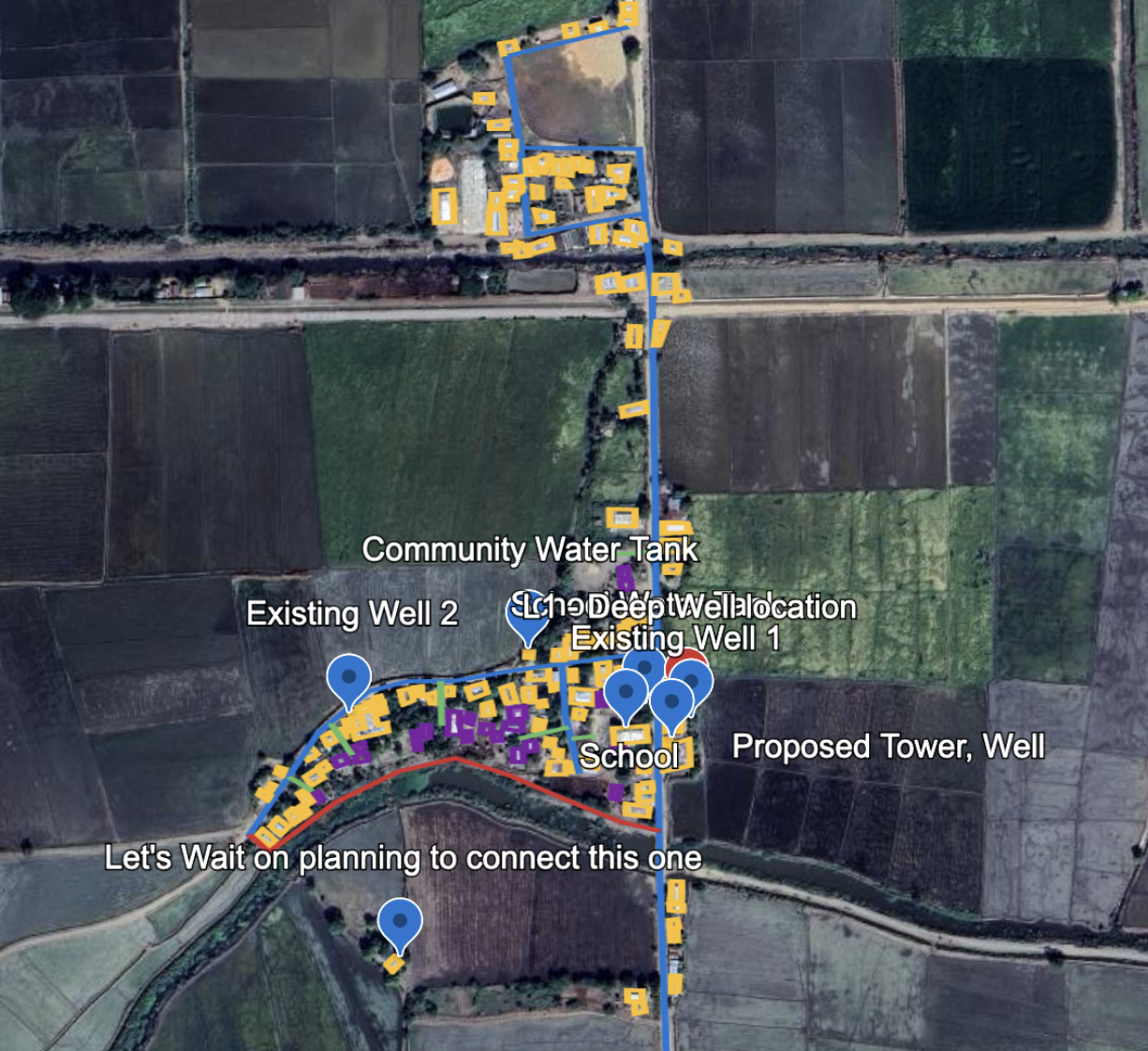
The goal for our international project is to ensure that the community we are working with in the Dominican Republic (DR), La Recta de Sanita, can be “water independent.” Drilling a deep well in the community would allow them to not be fully reliant on the sometimes unreliable government controlled water system. As a part of this group, you will meet with our non-governmental partner, AgroFrontera, and the Lehigh Valley Professional EWB Chapter, who both have experience with deep well drilling in nearby farms/communities. You will research how it has been done in the past, whether it is a good fit for this community, and any considerations/challenges, including but not limited to, costs, geology/hydrogeology of the area, distribution to households, and governmental well restrictions imposed by the National Institute of Drinking Water and Sanitation (INAPA) and the Dominican Institute for Water Resources (INDRHI).
Community Background
La Recta de Sanita is a rural community in the Dominican Republic that faces significant challenges with water access and reliability. The existing infrastructure is inadequate to meet the community's growing needs and often fails to provide consistent water supply.
Current Challenges
- Reliance on an unreliable, government-controlled water supply system
- Uncertainty about the geological and hydrogeological suitability for deep well drilling
- Potential high costs and logistical requirements for drilling and water distribution
- Governmental restrictions and permitting challenges from INAPA and INDRHI
- Limited existing infrastructure to reliably distribute water from a future well to all households
Project Objectives
- Achieve long-term water independence for the community through a reliable deep well system
- Assess the geological and hydrogeological feasibility of drilling a well in La Recta de Sanita
- Evaluate costs, logistics, and technical requirements for well construction and water distribution
- Collaborate with AgroFrontera and the EWB Lehigh Valley Professional Chapter to apply best practices from similar projects
- Ensure compliance with all governmental regulations and permitting requirements from INAPA and INDRHI
Technical Approach
The distribution group is modeling water system features such as the lengths of pipes, flow rates, pressures and losses. Our team uses hydraulic modeling software and engineering calculations to optimize the distribution network design.
Key Components
- Hydrogeological Assessment: Analyzing soil, rock, and groundwater conditions to determine deep well viability.
- Well Design & Drilling Plan: Creating a technical plan that includes depth, casing, pump type, and drilling methods.
- Cost & Resource Analysis: Estimating financial requirements, materials, labor, and long-term maintenance needs.
- Water Distribution Strategy: Designing how water from the well will be delivered to households and community facilities.
- Regulatory & Permitting Compliance: Navigating requirements set by INAPA and INDRHI to ensure legal construction and operation.
System Design Considerations
- Well Depth & Geological Suitability: Determining the appropriate drilling depth based on soil layers, aquifer capacity, and rock formations.
- Pump Selection & Power Source: Choosing the right pump type (submersible, solar-powered, electric) and ensuring a reliable energy supply.
- Water Storage Capacity: Designing tanks or reservoirs that can meet daily demand and provide backup during outages.
- Distribution Network Layout: Planning pipe sizing, routing, pressure management, and connections to households.
- Water Quality & Treatment Needs: Ensuring the system includes filtration or treatment if necessary to meet drinking water standards.
Community Impact
This distribution system will provide reliable water access to hundreds of community members, improving health outcomes, economic opportunities, and overall quality of life. The project emphasizes community ownership and long-term sustainability.
Student Learning Outcomes
Students working on this project gain experience in hydraulic design, community engagement, international development, and sustainable engineering practices while making a meaningful impact on a global community.
Get Involved
Students interested in hydraulic engineering, international development, CAD design, and community service are encouraged to join this impactful project that directly improves lives in the Dominican Republic.